

Every Christmas, eye-boggling sums of money are spent by brands and businesses up and down the country on advertising, each looking to attract new customers, retain existing ones and be top of mind when the food and presents are being bought. In this year’s Christmas quarter alone, a total of £12 billion was forecast to be spent on advertising.1
With so much at stake, the festive period is seen by many as the highlight of the advertising calendar, showcasing the best of the best, often featuring powerful storytelling, impressive casts and tempting offers. But how many of us admit to being prompted to a purchase by Christmas advertising? And what’s inspiring those who do?
A persuadable quarter
In a survey of 638 UK adults, just over a quarter (26%) said that they had seen a Christmas advert this year that had inspired them to buy gifts or Christmas food from the advertiser. This number may seem underwhelming, especially given the budgets in question, but there are some factors to consider.
Firstly, much high-quality, large budget advertising is not just about encouraging immediate action, but about building and reinforcing a brand’s appeal over a longer time. As Les Binet and Peter Field famously recommended, 60% of adspend should go towards brand-building and 40% to go towards short-term sales activation. So, the consumer who has shopped at Tesco for their Christmas dinner for the past five years may not have switched this year due to advertising, but stayed; just as powerful an effect of Tesco’s campaign.
Equally, people are reluctant to admit to being susceptible to ads. We each tend to believe that our decisions are entirely autonomous, logical and immune to external forces. But that is far from the truth. Also at play is advertising’s role inbuilding brand awareness, positivity and trust; and, ultimately, an intention to purchase.
The 26%, then, is perhaps not as low as it initially seems. Put in other terms, only a quarter of us openly recognise, remember and admit to being inspired to shop by a specific ad.
Another age effect
Credos have consistently found that there is a generational divide when it comes to trust in advertising. In 2025, 64% of 18-34-year-olds trusted advertising, compared to 40% of 35-54s and 23% of those over 55.2
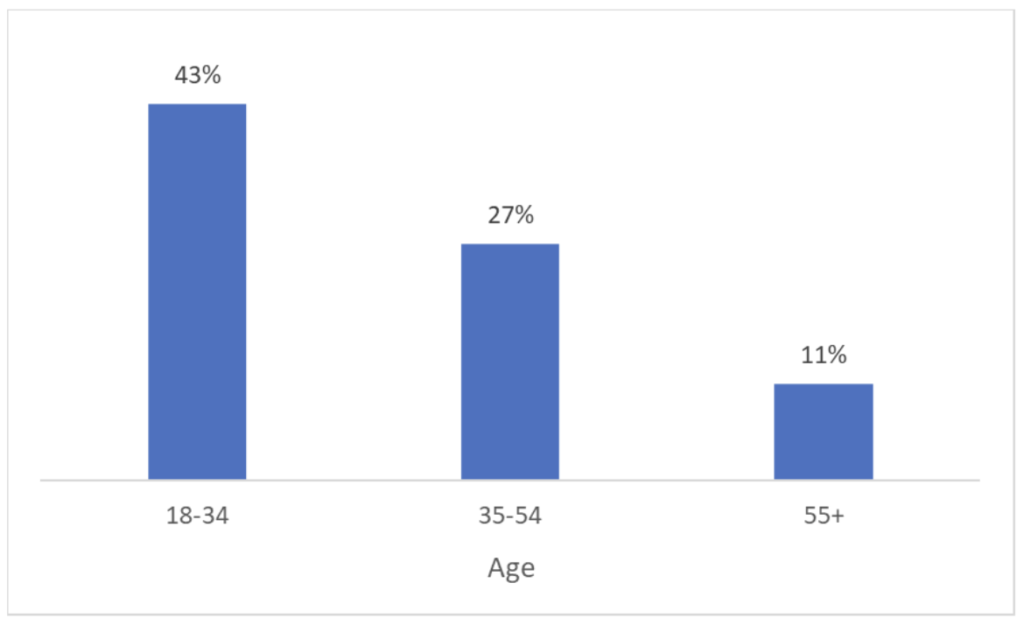
When it comes to Christmas advertising, it appears that this trust is related to action. As shown in Figure 1, younger respondents were far more likely to claim that they had been influenced by a Christmas advert this year.
Figure 1. Have you seen a Christmas advert this year which has inspired you to buy gifts or Christmas food from the advertiser?
18-34: N = 188
35-54: N = 207
55+: N = 242
Perhaps, then, the younger generation are more willing to receive and act upon ads because they trust them more. Or maybe it works the other way, too: younger audiences trust advertising more because they are more willing and open to acting upon its messages and more interested in discovering new products and better offers.
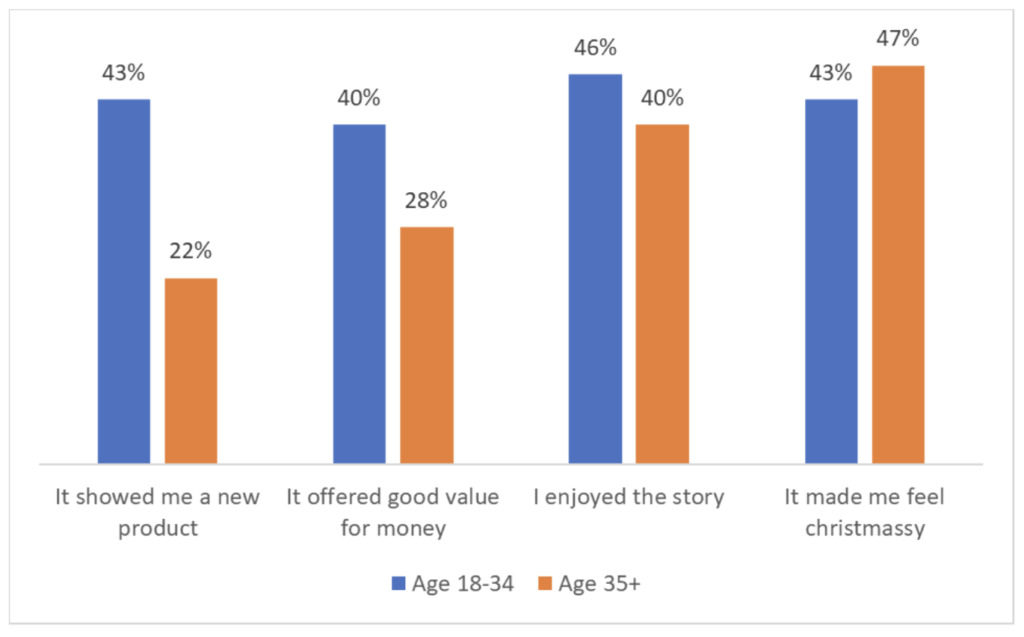
To get a clearer picture, we asked those participants who responded positively to the first question what it was that inspired them to purchase from the advertiser. The four most popular reasons of nine options are shown in Figure 2.
Figure 2. “What was it that inspired you to consider shopping there?”
Base: Those who responded “yes” to previous question
18-34: N = 81,
35+: N = 85
Figure 2 seems to demonstrate a divergence in the elements of advertising that different age cohorts value. For the younger respondents, the fundamentals of advertising remain highly important: introducing new products and communicating good value for money are as important as anything else. For those over the age of 35, elements of good Christmas storytelling predominate.
This is a theme that has surfaced in Credos’ latest qualitative research into the drivers of trust in advertising: it appears that younger audiences increasingly value advertising that shows the product being used, tested and explained by a trusted figure. The rise of influencers has both met and accelerated this expectation amongst younger audiences. The full research findings will be presented in February at LEAD 2026, the Advertising Industry’s Summit.
It is unsurprising that older people are less likely to value advertising that shows them new products and offers good value for money. With age and experience come more ingrained habits, preferences and tastes. Looking for new products and even tempting deals may become less motivational with age.
This difference in advertising experience between age cohorts also likely arises due to where people tend to receive their advertising. Younger audiences increasingly experience advertising online and on social media, including from influencers, where short-term activation and product demonstrations are more suited. For older audiences, where traditional channels remain key, story-led, long-term brand building campaigns are far more common. It is therefore likely that younger are simply being served more advertising which introduces them to new products and uses discounts and offers to encourage action.
Conclusion
Though this is just one quarter’s findings, a picture does emerge: younger audiences act more readily and immediately on advertising than older ones. More interested in, and open to, seeking out new products, the young are more willing to acknowledge their engagement with Christmas advertising than older respondents. In the end, Christmas ads may be the cream of the advertising crop, but it’s the youngest among us who are paying the most attention.