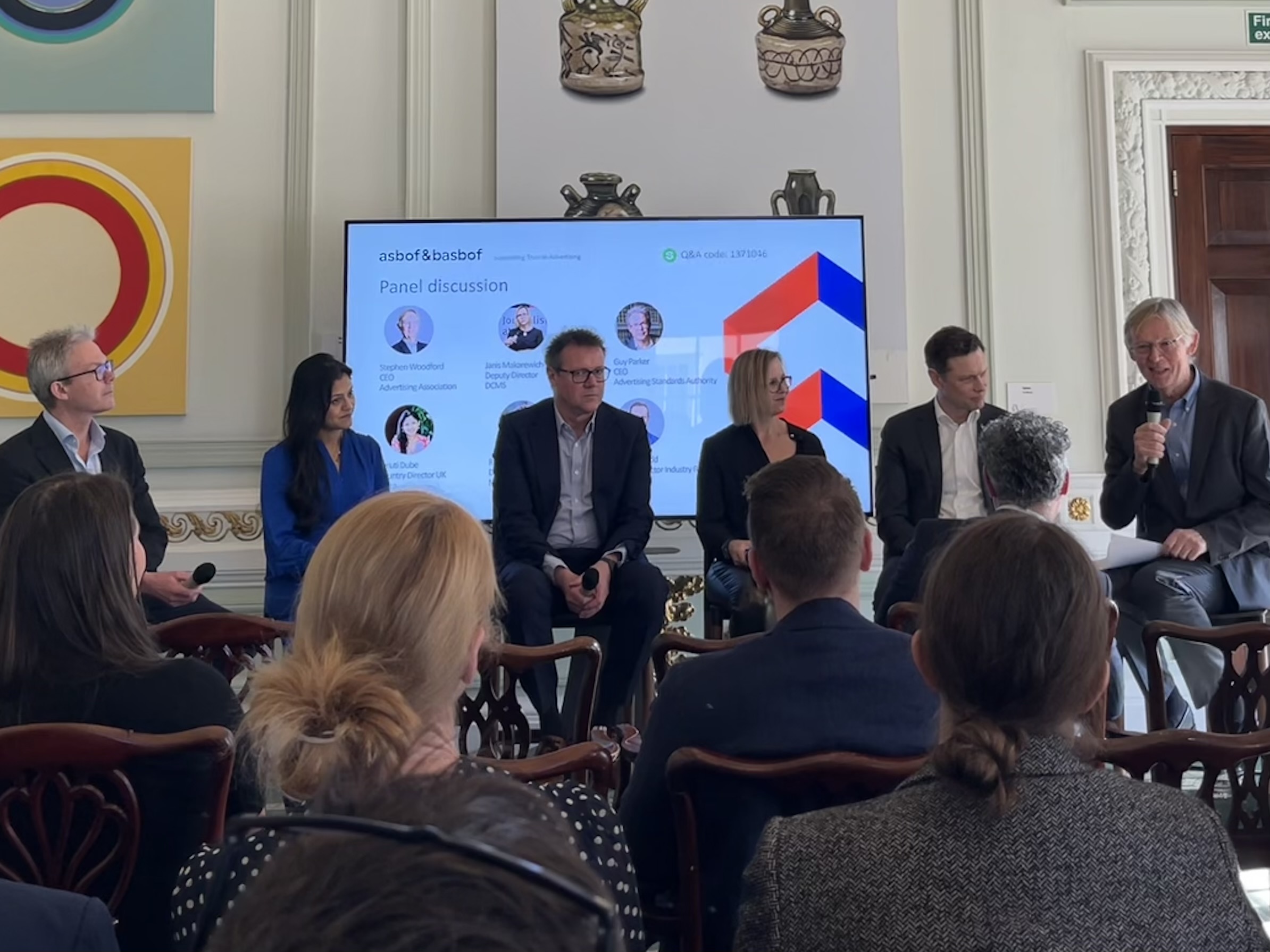
On 20 January 2026, the Advertising Association’s Director of Public Policy and Regulation, Konrad Shek, delivered an address to the Westminster Media Forum: The Future of Public Service Media. It follows the publication of the Government’s Green Paper on the BBC Royal Charter Review, which explores several funding models, including proposals for the BBC to carry advertising on its public services.
A digest of Konrad Shek’s remarks can be read below:
The UK advertising industry is a global leader in creativity and innovation, with advertising playing an important part in funding media, arts, sport and culture.
Through the Advertising Standards Authority (ASA) the UK is a recognised world leader for advertising self-regulatory practice and operates without cost to the taxpayer.
Advertising is important not only for the media, culture and sport but also for the funding of online content, which otherwise would require paid subscriptions, but it also helps SMEs and start-ups find new markets. It even supports charities to find donors.
The vitality of this sector is evidenced by our latest data: UK advertising spend rose by 9.1% in Q2 2025 to reach £11.3 billion, with the first half of 2025 seeing growth of 8.9% to £22.0 billion. The market is forecasted to grow by 8.2% in 2025 to £46.0 billion, rising further to £49.1 billion in 2026.
Our Ad Pays 2025 report showing that advertising supports 1.7 million jobs across the UK and every £1 spent on advertising returns £4.11 1 in profit for medium to large businesses and £1.89 for micro-small businesses.
This backdrop brings me to three critical issues facing public service media today: evolving audience viewing habits, sustainable funding models, and regional representation.
Firstly, on audience viewing habits, we’re witnessing a fundamental transformation in how audiences consume media. The latest data shows remarkable shifts: video-on-demand was the fastest-growing channel for ad spend in Q2, up 23.2% year-on-year, whilst cinema ad spend had a strong quarter with 19.7% growth thanks to major film releases. Online radio saw double-digit growth of 11.2%, with online formats now accounting for over 81% of total advertising spend. These figures reflect audiences increasingly seeking content on their own terms – when, where, and how they want it.
This shift presents both opportunities and challenges for public service media. Young audiences, in particular, are consuming BBC services less frequently, whilst trust levels, though still high relative to other providers, have declined. Trust in BBC News, for example, has dropped by 15 percentage points since 2018.
The challenge is maintaining relevance and reach across all demographic groups whilst preserving the universality that defines public service broadcasting.
Secondly, on funding, the landscape has become increasingly complex. The recent Green Paper on BBC Charter Review explores various funding models, including the controversial proposal for the BBC to carry limited advertising or advertising on all on its public services.
From our perspective, we do not support this proposal, whether applied across all BBC services or limited to online platforms.
Our concerns are straightforward: the BBC is likely to eat into a shrinking pie rather than expanding it for everyone. The BBC Charter Review Green Paper states that “Total TV revenue (linear and broadcaster video on demand (BVoD)) for all commercial broadcasters fell from £5.1 billion in 2018 to £4.9 billion in 2023 (a 3.9% decline in nominal terms) and linear advertising spend fell by 20% in nominal terms.”
The UK advertising market, whilst growing, faces headwinds from economic uncertainty and increased competition. Introducing a major new player with the BBC’s scale and public funding advantages would fundamentally alter market dynamics in ways that could undermine the commercial sustainability of existing broadcasters who rely entirely on advertising revenue.
We think that current system works: advertising-funded media provides diverse content whilst the BBC, funded through the licence fee, offers distinctive public service programming. This complementary model has served the UK well and preserved the BBC’s independence from commercial pressures.
Thirdly, on regional considerations, there’s a pressing need to ensure public service media genuinely represents and serves all communities across the UK. The forecasts for Q4 2025 show the continuing importance of local and regional media connections, with cinema expected to grow by 3.7% and out-of-home by 3.1%, benefiting from festive footfall, alongside smaller rises in direct mail and radio.
The Green Paper rightly emphasises moving more commissioning and budgetary decision-making outside London. This isn’t merely about geographical distribution – it’s about ensuring content reflects the full diversity of British experiences and that economic opportunities from our creative industries benefit all regions. But it is important that this does not duplicate commercial broadcasting offerings.
Regional representation also matters for advertising. Our members recognise that effective campaigns must speak to local audiences and circumstances. A thriving regional media ecosystem, properly funded through a mix of public service provision and commercial support, creates the conditions for this.
Looking ahead, public service media must navigate these challenges whilst preserving its core mission. The answer isn’t to blur the lines between commercial and public service broadcasting, but to strengthen each in their respective roles.
The advertising industry will continue to support a diverse and healthy media landscape – one where commercial and public service models can coexist and thrive. Our latest figures show the resilience and adaptability of advertising-funded media. The BBC’s future should build on its unique strengths as a universal public service, not dilute them through commercial compromises.
—
For more information about the Advertising Association’s work in this area or if you are a member wishing to join the BBC Funding Working Group, please email pga@adassoc.org.uk
1 Thinkbox Profit Ability 2