As part of the Advertising Association’s centenary celebrations, we’re looking back at key moments from our history. In this second article, we step into the 1950s and 1960s.
1955: The launch of commercial TV
Passions ran high when the 1954 Television Bill to enable commercial TV to compete with the BBC was raised in Parliament. Lord Reith, a key figure in the founding of the BBC, regarded the prospect of TV advertising as equivalent to the Black Death, bubonic plague and smallpox. However, the competition that the Conservatives wanted, came to fruition on 22nd September 1955 with the launch of ITV. It reshaped the entire advertising market, as well as the tone of the debates around advertising. The Advertising Association had a major influence on the first edition of the ‘Principles for TV advertising’ and was keen to see standards upheld in the same way as other media. The first advert shown on ITV was for Unilever brand Gibbs SR toothpaste.
1957-60: Outdoor Advertising and the Clutter Code
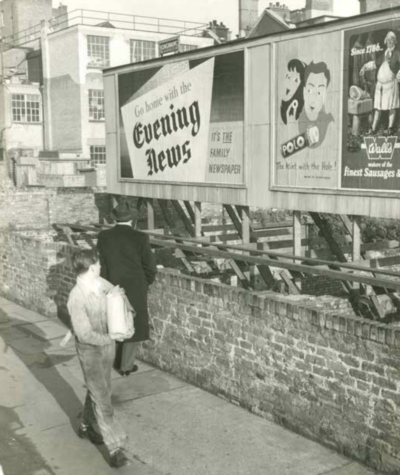
In 1957, the outdoor advertising industry was under the spotlight. Local authorities and MPs were objecting to the number of posters that could be seen on the outside of shops, pubs and other outdoor amenities. When the government proposed strict, impractical new regulations, the Advertising Association stepped in to negotiate a voluntary, self-regulatory solution. Former AA President Lord Luke led the industry consultations, culminating in the 1960 Code of Standards for Business Premises—widely known as the “Clutter Code”. The AA took on the key responsibility of overseeing compliance through a dedicated Consultative Committee. To ensure wide adoption, the AA distributed 50,000 copies, successfully securing commitments from over 300 advertisers, trade associations, and contractors to clean up commercial streetscapes.
1962: The Formation of the ASA
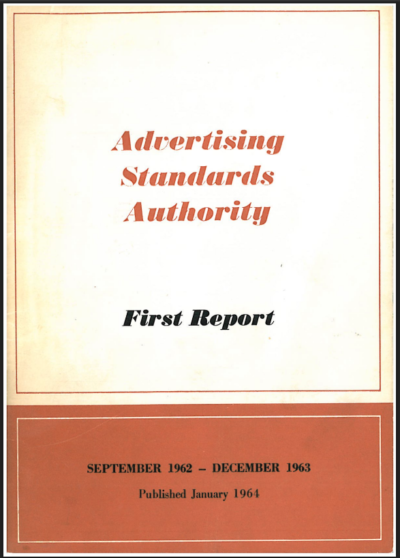
Following the 1959 General Election, Prime Minister Harold Macmillan launched the Molony Inquiry as part of its aim to strengthen consumer protection. Keen to offer a constructive solution alongside statutory oversight, the Advertising Association took proactive steps. Moving swiftly ahead of the inquiry’s final report, the AA introduced a comprehensive new Code of Practice and established an independent self-regulatory body: the Advertising Standards Authority (ASA).
Led by independent chairman Sir Arnold Plant, an economics professor from the London School of Economics, the ASA was designed to operate entirely autonomously. The AA funded the body and retained the right to appoint the chair, but exercised no control over its decisions, procedures, or member nominations. The initial ten-member ASA Council was evenly split between five industry experts and five independent figures, with appointments formally announced in Parliament.
To promote the framework, the AA published How Advertising Disciplines Itself, ran educational ad campaigns, and deployed a nationwide Speakers’ Panel to explain the social and economic value of advertising to local communities.