By Matt Bourn and Sebastian Munden, co-authors of Sustainable Advertising
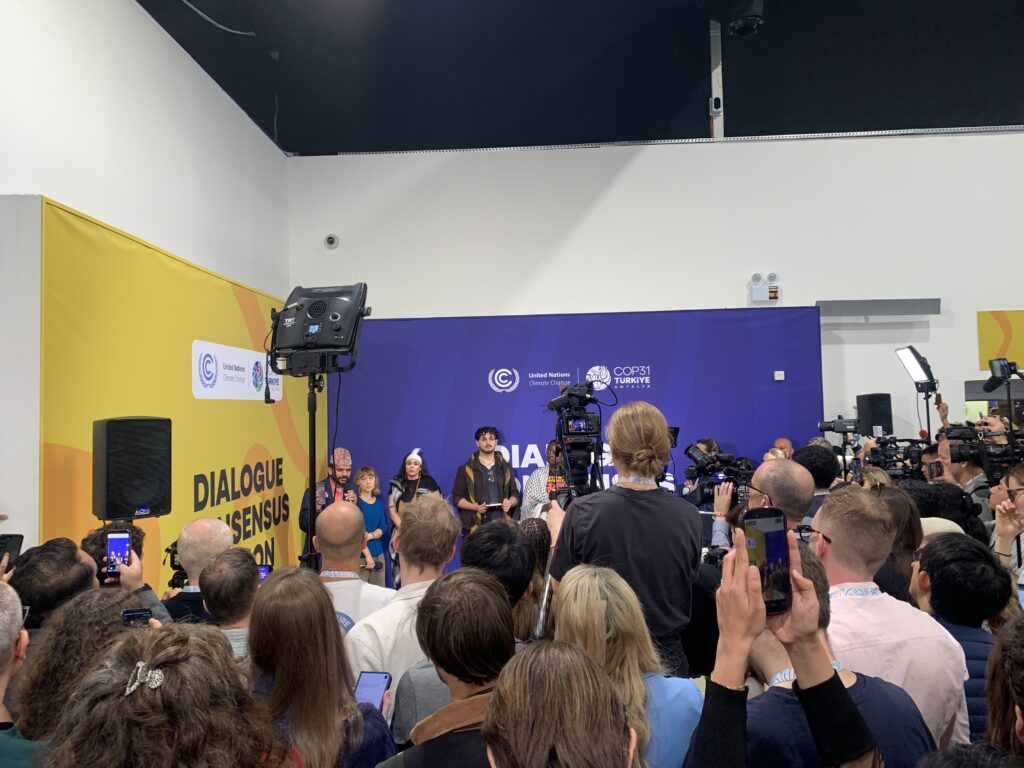
It could be easy to give in to despair as the longest-running UN climate summit on record ends without a consensus deal. The headlines are bleak, the political deadlock is frustrating, and the temptation to double down on apocalyptic warnings is stronger than ever.
The breakdown of COP31 is a stark reminder that we cannot wait for multilateral perfection to save us. Over 130 countries wanted a bolder outcome and were not prepared to sign up to a dilution of previous agreements. As Australia’s Climate Change Minister Chris Bowen noted in his closing remarks in Antalya, in the real world, the transition is happening anyway, and it is irreversible. That real-world momentum is driven by businesses, brands, and the communications industry that connects them to millions of everyday people. The diplomatic process may have stalled, but the commercial transition is fully underway.
Last week, we delivered our now yearly seminar with MSc Business & Sustainability students at UCL on the theme of behaviour change. This year’s session was a particularly inspiring one for us as we ran a workshop with more students than ever, close to 80 s, all focused on how to best deliver the transition.
We began by drawing from our book, Sustainable Advertising, reflecting on the themes we uncovered about successful behaviour change. Put simply, the consistent triumph of hope over fear.
Climate communications can fall back on apocalyptic warnings and guilt. While fear may be effective for applying political pressure, it is not great at inspiring everyday behaviour change. When people feel overwhelmed, they freeze. Yet the opportunity in front of us is enormous. Research shows that while a minority of the public are climate activists and another small fraction may never be convinced, a massive majority sit right in the middle. They believe climate change is happening and want to do the right thing; they just need a helping hand.
That is where commercial creativity comes in. In our book, we explored the “magic ingredients” that turn good intentions into mass behaviour change. Drawing on insights from the Behavioural Insights Team, System1, ITV, and NYU Stern, there’s a clear blueprint: we have to sell ‘better’. That means choosing hope over fear, telling human stories rather than presenting dry statistics, and connecting sustainable choices to immediate, personal benefits, like saving money, boosting health, or enhancing status. Above all, it means applying the EAST framework – making green choices Easy, Attractive, Social, and Timely – and using an “and/and” mindset where commercial growth and planetary health reinforce one another.
To put all this to the test, we challenged our UCL students to pick an industry, identify a sustainability problem, and design a commercial campaign that actively solves for the transition. The resulting thinking was what inspired us. The students instinctively bypassed the doom-and-gloom clichés and went straight for human truth, commercial viability, and cultural relevance.
They tackled some of the hardest-to-shift behaviours, where optimism and personal benefit are vital. One team looked at Electric Vehicles, recognising that explaining range anxiety and abstract carbon metrics won’t win over the mainstream. Instead, they focused on aesthetics, status, and the real-world financial savings coming down the line for the driver.
Another group took on the challenges for fast food, addressing agricultural emissions by sneaking plant-based nutrition into a fun family road-trip narrative with “The Great BMac” – balancing meat reduction by adding beans into a familiar favourite. Similarly, a team tackling dairy alternatives focused on the festive season, creating a warm, inclusive story where a vegan family member means everyone gets a piece of the pie. It was a textbook example of what ITV and System 1’s The Greenprint asks – meet people 90% of the way.
Other teams demonstrated a grasp of cultural reframing and circularity. In luxury fashion, rather than apologising for lab-grown leather, one group proposed a hyper-exclusive, 2030-pieces only limited-edition collaboration to make sustainable material rare, covetable, and high-status. In fast fashion and textiles, students flipped the script on overconsumption: one campaign turned Vinted into an emotional journey through an older woman’s flashbacks tied to a single cherished shirt, proving stories beat stats every time, while another hijacked Fashion Week with the provocative truth that “new isn’t trendy.” A third fashion team solved the trust gap around retail take-back schemes by following a garment’s journey beyond the drop-off bin into a social enterprise, answering the consumer’s unspoken question: what actually happens next?
Crucially, the graduate students also understood the power of friction-free interventions at the right time and place. Whether it was making in-store cosmetics recycling drop-boxes accessible, turning the tech customer into the star of a circular trade-in campaign, or transforming a Premier League match day into a seamless green experience, complete with reusable cups, plant-based menus, and player endorsements inspired by Forest Green Rovers. Every idea made the sustainable choice the easiest and most enjoyable one. Even in complex sectors like food miles and Latin American aviation, the teams leaned into pride, freshness, and aspiration, championing “certified short food journeys” and regional travel.
These future business leaders see sustainability as a growth engine. Research from the Institute for Real Growth shows that businesses focused on creating value for all stakeholders, customers, communities, and the planet, outperform their peers in revenue growth.
Advertising is often caricatured as the engine of mindless consumption. But when we deploy our industry’s greatest strengths – empathy, humour, cultural insight, and persuasion – we can normalise sustainable living faster than regulation can.
History may remember COP31 as a failure of political consensus, but it does not have to be a failure of commercial imagination. Millions of people in the ‘persuadable middle’ still want to do the right thing; they are simply waiting for brands to make the sustainable choice easy, attractive, and culturally rewarding. Advertising has the power to bridge the gap between scientific urgency and everyday human desire. While diplomats regroup, marketers and business leaders have a clear choice: mirror the paralysis of politics, or embrace the optimism of the next generation and sell a better future.
Sustainable Advertising is out now, published by Kogan Page. Use discount code SALE40 for a 40% discount on the book up until Monday 30th November 2026.